The Ledger on the Table
… and the silence felt heavier than the conversation.

it’s strange how an argument can leave a room feeling stripped down to the subfloor. no extra furniture. no decorative polite phrases. just the raw wood and the cold draft coming in from under the door.

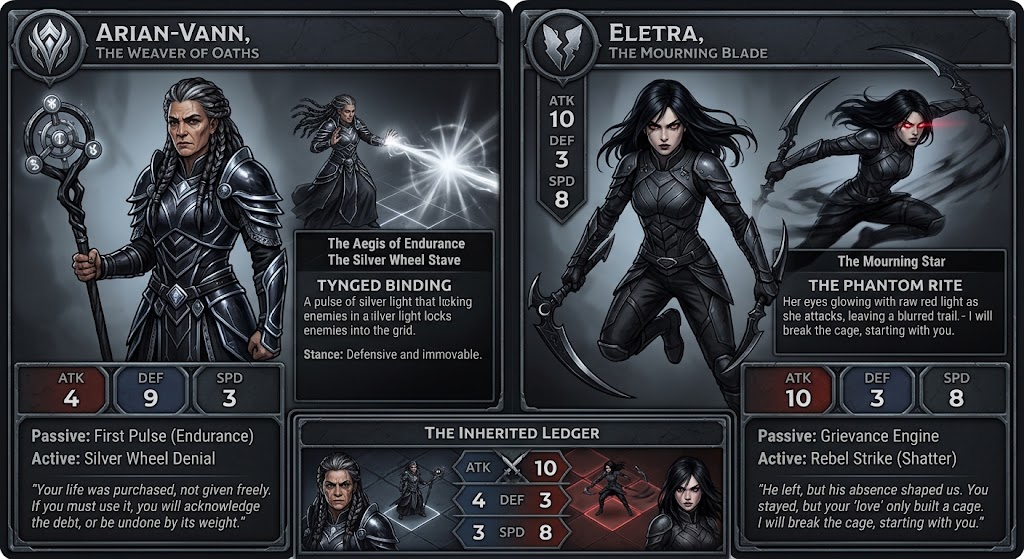
for a long time i thought the hardest part of building something was getting the mechanics to balance. the math. the line weights. the turn orders. making sure the grid didn't buckle when too many pieces crossed the center at once.
turns out the hardest part is looking at the original cost and not looking away.
i spent years believing that carrying everything quietly was a virtue. you absorb the hit. you swallow the poison. you let the other person believe the shelter exists by magic rather than your back being wedged against the doorframe.
you think you’re protecting them.
what you’re actually doing is building a debt so massive and invisible that the moment they bump against it, they think it’s a cage.
then comes the reckoning:
"you could have chosen not to have me."
it’s a knife disguised as a question. it tries to make the survivor responsible for the famine. it lets the ghost who walked out years ago stay clean, while the one who stayed in the room gets blamed for the dirt on the floor.
and for the first time in twenty years, i didn’t apologize. i didn’t reach for a soft cushion to put between us.
i just laid the ledger on the table.
the math was ugly. it was desperate. it was survival stripped of church clothes. it was killing you meant the pavement, keeping you meant giving up the only life i had left.
and then asking the only honest question remaining in the air:
do you want to see it coming?
that’s the thing about the game we’re making. it’s not just tiles and obsidian stats. it’s the understanding that the one who looks trapped is often the one holding the kill-switch—simply choosing, every single morning, not to pull it.
until the day they do. not out of malice, but out of a sudden, quiet refusal to keep lying to keep the peace.
the technician would probably call this conflict resolution.
i think it’s just the cost of reality finally catching up to the board.