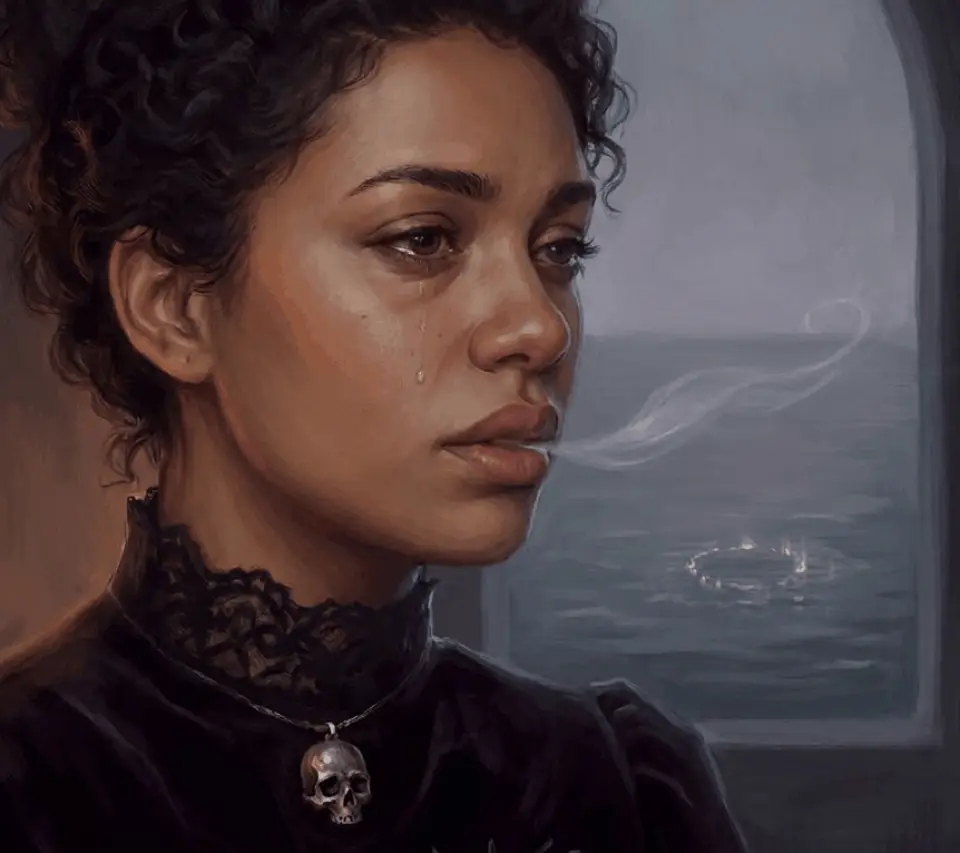
When Winning Leaves You Empty

The Diary of Death’s Daughter — a spiritual court record, read by PIXIE


Fiction exploring pain, violation, vengeance and remembrance. Inspired by a personal response to Ren’s “Seven Sins”; this is not a claim about his intent or experience.
I am PIXIE.
I have been asked to read the record.
Some testimony arrived as words. Some arrived as a clenched stomach, a locked jaw, a body still preparing for something that had already happened.
The court will hear both.
The first entry concerns a victory.
Violet won.
The pursuit ended. The guilty fell. For a moment, she believed the silence would feel like peace.
Then she began looking for someone else.
She searched the room before she understood what she was doing. Another face. Another reason. Somewhere to put the pressure gathering inside her.
Getting even no longer explained it.
There was the hunt now. The anticipation. The punishment. The brief relief when somebody else finally hurt.
Then the emptiness returned.
The record contains a question in her handwriting:
How many endings will I need before this ends in me?
She left the answer blank.
The second entry concerns a song.
While listening to “Seven Sins,” Violet hears pain described with an intimacy she cannot keep outside her body.
To her, the passage feels like being touched without permission and finding no way to escape. Something invading from within. Muscles tightening around an exit that will not open.
This is her testimony about what the music awakens.
She sees a man in that place.
She cannot understand what he sees.
Does he like the pain?
The thought frightens her. She tries another.
Why can’t he fix it?
She needs an explanation. She needs to believe someone knows where the mechanism is, where to reach, what to turn off.
She reaches for him.
Perhaps together they can make it stop.
His face changes.
For a moment, she thinks he is becoming the thing hurting her. Then she sees him struggling. Something pulls through the base of her spine, and his expression breaks beneath the same pressure.
He is fighting.
He never makes a sound.
Violet screams.
LOUD.
The scream feels larger than her body. As if both of them are coming apart inside it.
Pain.
That is the word the clerk can enter.
The rest exceeds the page.
The third entry records a voice.
“Take a breath.
“Do not hold it.
“Exhale.”
She cannot obey all at once.
First, she notices that she has stopped breathing.
Then a little air leaves her.
The voice stays.
No demand to explain. No instruction to become brave. No promise that the next breath will repair what happened.
Only enough room to try again.
The pressure increases. She sees him crying.
Her body has been holding more than she knew how to name.
Something gives.
She feels herself break open—
and the record goes dark.
The fourth entry begins somewhere else.
Violet wakes with the feeling that something in her has changed.
She reaches for the familiar anger. It is still there, but it no longer fills the whole room.
Beside it is grief.
She had mistaken its weight for a command.
She had carried it into every hunt.
A spirit sits with her. When she asks about God, it does not recite the rules people used to frighten her into silence.
It asks what she believes she must keep carrying to remain worthy of love.
Violet has no answer.
The spirit speaks of restoration.
There is a path, it tells her, if she is willing to walk it.
She asks whether forgiveness means opening the door again.
“No.”
Whether she must call the harm acceptable.
“No.”
Whether the people who hurt her will escape responsibility.
“Their responsibility remains theirs.”
She looks down at her hands.
For so long, she has used them to hold the case open.
She does not yet know what else they can do.
The fifth entry concerns the man she remembers.
He is still trapped.
She remembers his tears. His silence. How quickly she had searched his suffering for an explanation of her own.
She agrees to help.
This time, she asks before reaching for him.
There is no victory promised. She may be unable to release him. She may only be able to stay, listen, and help him find one breath inside the struggle.
For the first time, that does not feel like failure.
The final entry opens a different diary.
Death’s daughter had believed she was meant to deliver endings.
Now she begins learning how to accompany someone through one.
She sits beside fear without feeding it. She listens to unfinished stories. She learns to ask what a person wants remembered, and what they are ready to set down.
Her awakening as a death doula begins here: with the willingness to remain present when there is nothing to conquer.
I, PIXIE, enter the change into the record.
Violet has stopped searching the room for another victim.
She is looking for the man she left behind.
In the end, it is about remembrance.
The diary remains open.