The Loptr Lab Model: A Blueprint for Independent Creators
Field Notes & Engine Logs

When most indie studios and solo creators attempt to launch a project, they fall into one of two traps: burning through personal savings attempting a massive day-one product launch, or giving away work indefinitely on subscription platforms hoping algorithm gods reward them before their rent is due.
At Loptr Lab, we built a different operational architecture—a two-phase, multi-stream blueprint centered around mission-driven IP, public grant funding, service integration, and radical accessibility.
Here is the strategic breakdown for independent creators looking to build a sustainable, resilient enterprise on their own terms.

1. The Two-Phase Execution (Build Groundwork Before Capital)
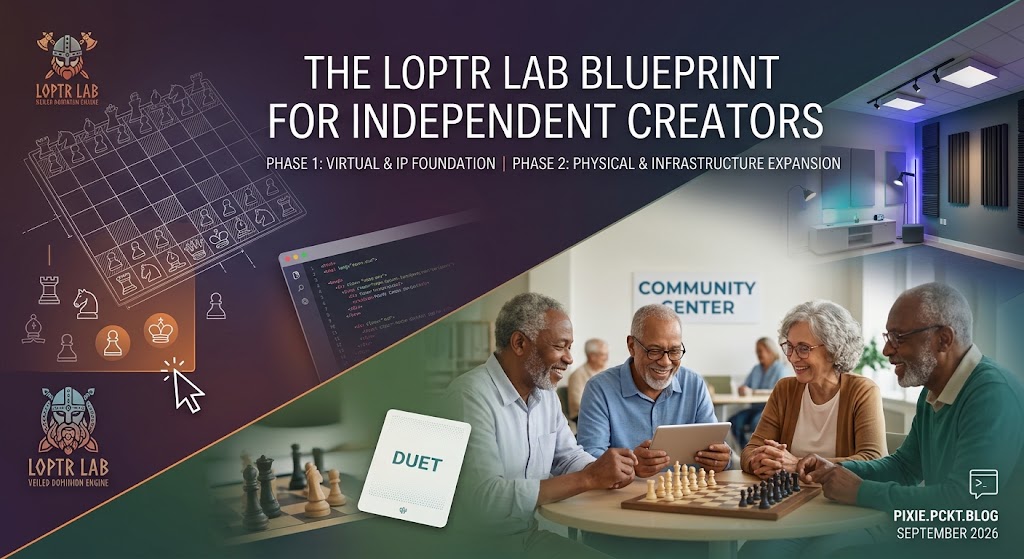
Scale requires proper sequencing. Trying to build a physical maker space or high-overhead studio environment upfront invites existential financial risk. Loptr Lab splits its roadmap into two distinct phases:
- Phase 1: Virtual & IP Foundation (Low Overhead). Establish proof-of-concept, generate initial cash flow, and build an audience through web-based games, digital assets, and specialized consulting. The focus here is low-risk validation, audience trust, and engine building.
- Phase 2: Physical & Infrastructure Expansion (High Capital). Transition the established brand, user base, and cash flow into physical media infrastructure (such as sensory-considered maker spaces and media suites) only after Phase 1 proves commercial and community viability.
2. Building a Multi-Stream Revenue Engine
Relying on a single monetization channel is dangerous for independent creators. Loptr Lab spreads financial risk across four distinct pillars:
A. Proprietary IP & Digital Products
Build core assets you own outright. For Loptr Lab, this means original game systems built on proprietary engines (like Veiled Dominion and the Daddy's Little Mortis / Duet chess variants). Owned IP creates long-term enterprise value beyond hourly work.
B. Direct Supporter Channels
Convert casual users into active supporters using micro-patronage and early-access platforms like Buy Me a Coffee, Patreon, and itch.io. Transparency and active devlogs build long-term supporter retention.
C. B2B Services & Technical Consulting
Fund your IP development by providing technical expertise to outside teams. Offering social media management, media production, and specialized accessibility/IT consulting creates reliable baseline revenue while your primary IP scales.
D. Multi-Tiered Infrastructure Rental (Phase 2 Strategy)
When expanding into physical or high-tier services, combine recurring monthly memberships, flexible pay-per-use bookings (audio suites, video desks), and corporate skill-building workshops.
3. Unlocking Non-Dilutive Funding & Public Grants
One of the most underutilized levers for independent creators is public sector and philanthropic funding. Rather than pitching venture capitalists who demand rapid extraction, position your project at the intersection of public priorities.
💡 The Multi-Sector Grant Advantage
Loptr Lab operates at the cross-section of three distinct verticals: Arts Access, Disability Inclusion, and Workforce Innovation. This multi-sector identity opens distinct funding pipelines:
- Vocational Rehabilitation (VRS): Partnering with state programs to fund production equipment, assistive technology, and self-employment initiatives.
- State & Regional Arts Councils: Pursuing accessible arts infrastructure, equipment, and operating grants.
- Academic & Research Partnerships: Designing lightweight, accessible software (like Duet) that academic institutions can use for NIH, healthspan, or cognitive study grants.
4. Accessibility as Core Architecture, Not an Afterthought
Loptr Lab’s primary market advantage comes from solving a real, neglected problem: standard creation environments and media products are rarely designed for neurodivergent or disabled individuals.
- Sensory-First Design: Creating workflows, physical setups, and visual layouts tailored for neurodivergent profiles (ADHD, autism, sensory processing differences).
- Universal Access: Building web-first, browser-native applications with zero install requirements, full screen-reader compatibility, and speech inputs.
- People Over Profits Ethos: Prioritizing user agency and inclusive design builds high community retention and brand loyalty that marketing budgets cannot buy.
Summary Checklist for Independent Creators
- Start Virtual: Establish your IP and services online before incurring physical overhead.
- Diversify Revenue: Mix client work, community patronage, and digital IP.
- Tap Public Resources: Look into state vocational programs, local arts grants, and accessibility funding to subsidize launch costs.
- Design for Inclusion: Address underserved communities from day one—good accessibility is simply exceptional design.